
Reform
With approximately 22 million pieces of furniture discarded in the UK annually, ReForm was designed to challenge the "take-make-waste" model. The project represents a first foray into working with curves, taking its name from the process of compressing commonly discarded items to form something new without seriously altering their original material properties. It posits that while recycling is good, reusing and reinventing is better, as it avoids the energy-intensive processes required to reset materials to their raw states.
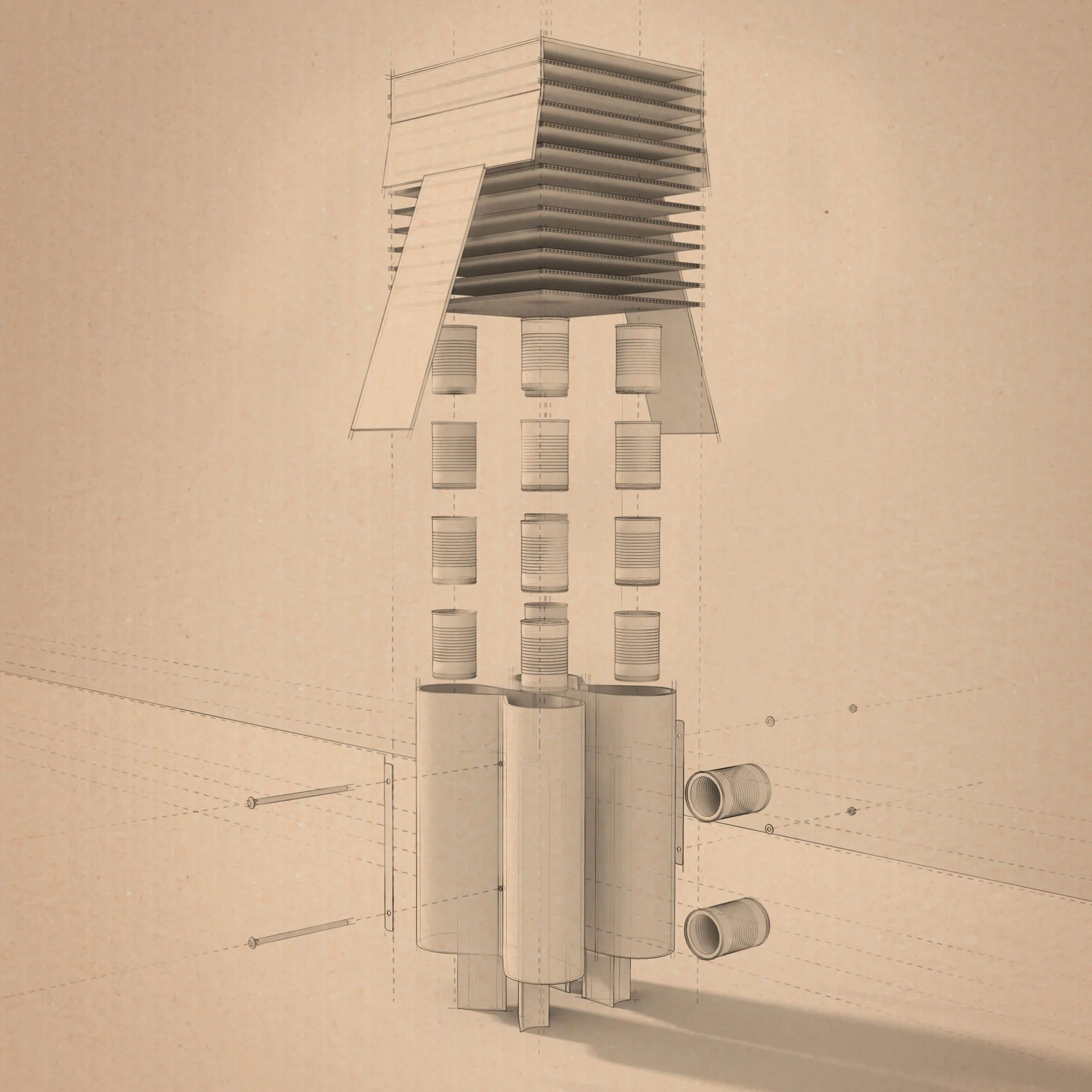
Materials & Process
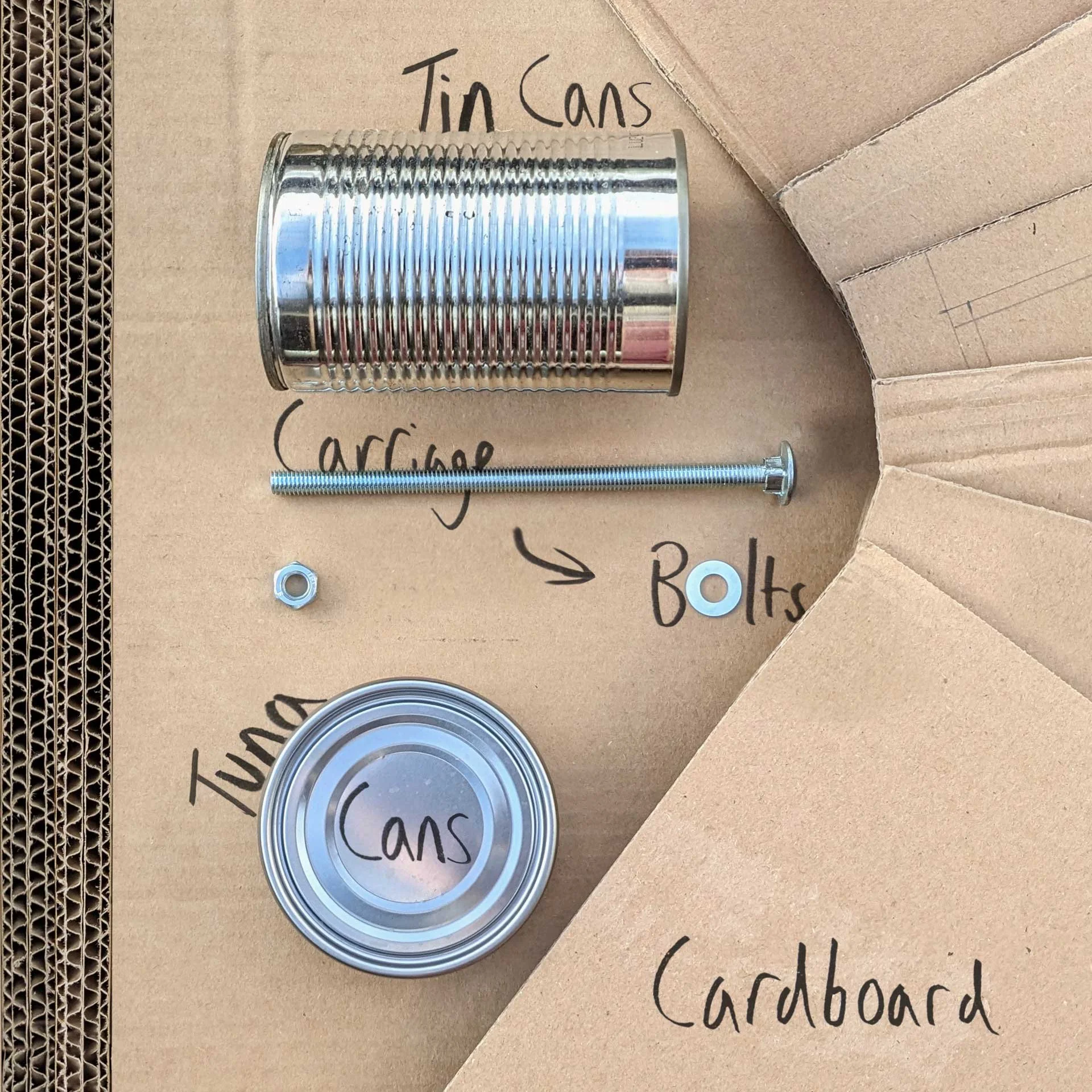
The "recipe" for ReForm consists of materials found in almost every household recycling bin.
The Core: Upcycled IKEA cardboard boxes.
The Structure: Stacking 400g metal food cans (chopped tomatoes, baked beans).
The Details: Discarded tuna cans.
These elements are fastened together using just two carriage bolts. By subtly altering the function of these objects rather than their material state, we extend their longevity significantly.

Circular Design Philosophy
Like all pieces in this series, ReForm adheres strictly to circular economy principles. It avoids adhesives entirely, relying purely on mechanical fixings. This ensures that at the end of its life, the table can be disassembled in moments, allowing the cans and cardboard to return to the recycling stream and the bolts to be reused for future projects.

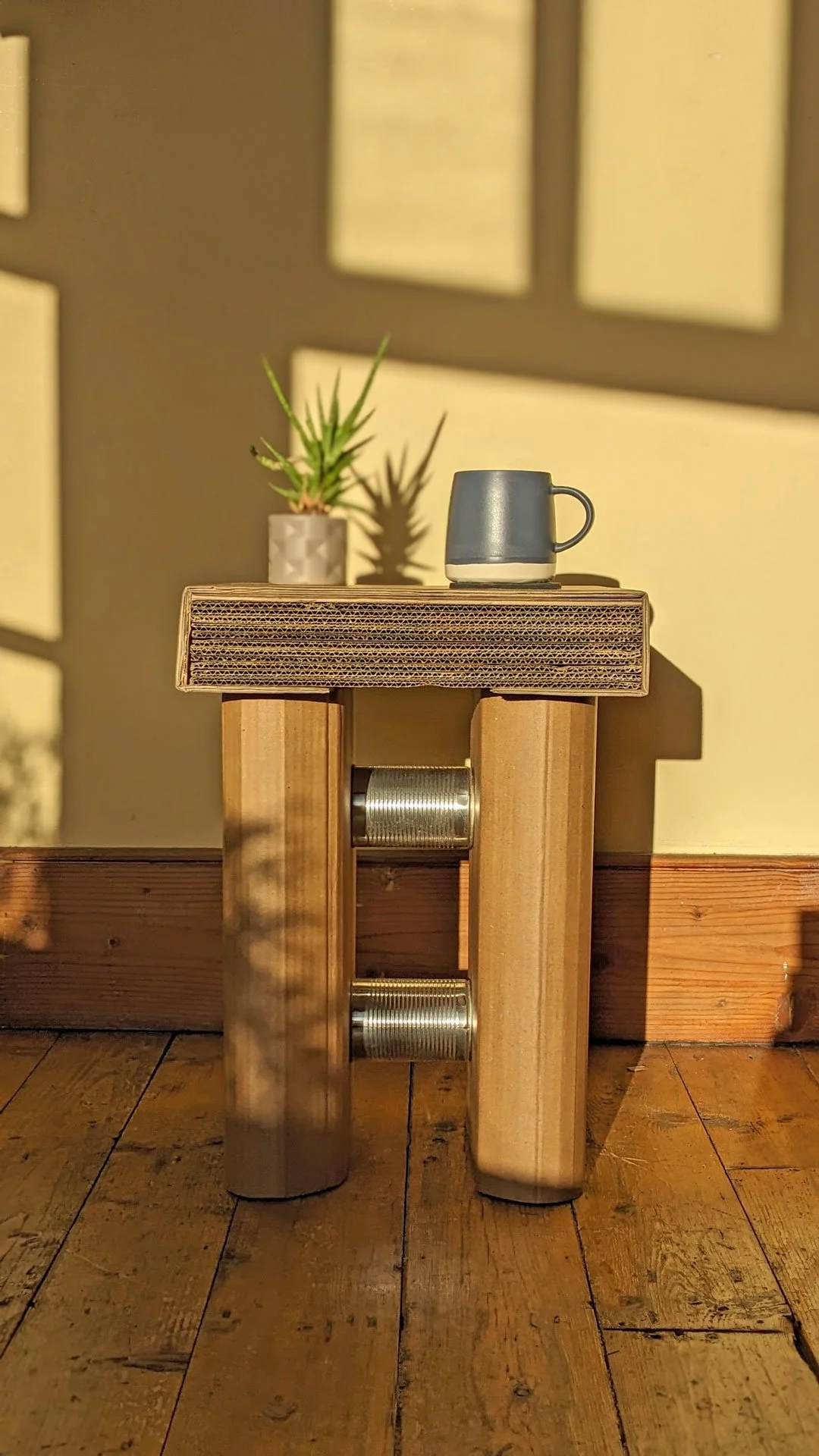
FUNCTIONALITY
Despite being made from hollow cans and paper, ReForm is both lightweight and surprisingly sturdy. It functions equally well as a side table or a stool, offering a practical solution derived entirely from waste.
